Article: When Worry Becomes Too Much: How to Know If Your Child Is Actually Anxious
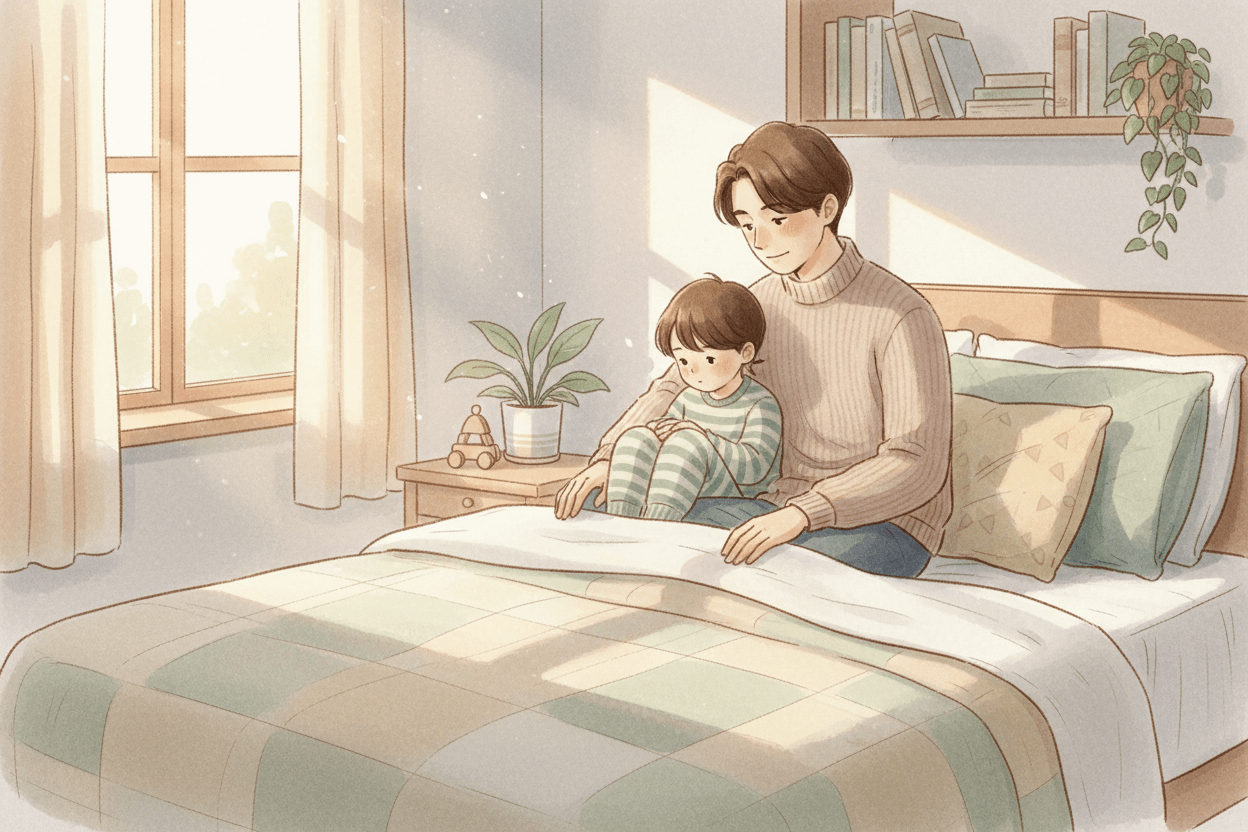
When Worry Becomes Too Much: How to Know If Your Child Is Actually Anxious
Every kid worries sometimes. That's normal. That's healthy, even—it means their little brains are developing exactly how they should.
But somewhere between "I don't want to go to school today" and full-blown panic attacks, there's a line. And as a parent, you need to know where that line is.
Because here's the thing: childhood anxiety doesn't always look like anxiety. It looks like stomachaches. It looks like tantrums. It looks like your kid suddenly refusing to do things they used to love. And if you don't know what you're looking at, you'll miss it entirely.
The Difference Between Normal Worry and Anxiety
Normal worry is temporary. It's tied to something specific—a test, the first day of school, meeting new people. It comes, it goes, and your kid moves on.
Anxiety is persistent. It sticks around even when the "scary" thing is over. It shows up in places it doesn't belong. And it starts interfering with your child's ability to just... be a kid.
Your seven-year-old should be able to go to a birthday party without having a meltdown in the car. They should be able to sleep in their own bed without catastrophizing about every creak in the house. They should be able to separate from you for a few hours without thinking you're going to die.
When worry stops being situational and starts being their default setting? That's when you need to pay attention.
What Childhood Anxiety Actually Looks Like
Forget the stereotype of a kid sitting in the corner wringing their hands. That's not how most anxious kids present. Instead, watch for:
Physical complaints with no medical cause. Stomachaches before school. Headaches that mysteriously appear when it's time to leave the house. Complaints of feeling sick that vanish the second they're allowed to stay home. If your pediatrician keeps saying "everything's fine" but your kid keeps complaining, anxiety might be the culprit.
Avoidance that's getting worse. They used to love soccer, now they suddenly hate it. They don't want sleepovers anymore. They refuse to go anywhere new. Anxious kids avoid things that trigger their worry, and that avoidance spreads like a virus if you don't address it.
Excessive reassurance-seeking. "Are you sure we're safe?" "You're not going to leave, right?" "What if something bad happens?" Over and over and over. They need constant confirmation that everything's okay, and even when you give it, the relief doesn't last.
Sleep problems. Trouble falling asleep. Waking up in the middle of the night. Refusing to sleep alone. Nightmares that are more frequent and intense than typical kid stuff. Anxious brains don't know how to shut off, and bedtime becomes a battlefield.
Meltdowns that seem disproportionate. A minor change in plans triggers a full breakdown. They lose it over things that shouldn't be that big of a deal. That's because anxiety makes everything feel like a crisis.
Perfectionism or fear of making mistakes. They erase their homework over and over. They melt down if they don't get something right the first time. They won't try new things because they might fail. Anxiety disguised as high standards.
Clinginess or separation struggles. They can't let you out of their sight. Drop-off at school is a nightmare every single day. They panic when you leave, even for short periods. This isn't just a phase if it's lasting months.
The "What If" Spiral
The clearest sign your child has anxiety? They live in "what if" land.
"What if there's a fire?" "What if you get in a car accident?" "What if I throw up at school?" "What if no one likes me?" "What if something bad happens?"
They're catastrophizing constantly. Their brain is stuck in worst-case-scenario mode, and they can't logic their way out of it—even when you try to reassure them.
If your kid is spinning out with "what ifs" multiple times a day, that's not normal worry. That's anxiety.
How Long Has This Been Going On?
Here's the clinical guideline: if these symptoms have been present for six months or more, and they're interfering with your child's daily life, you're looking at an anxiety disorder.
But honestly? Don't wait six months to do something about it.
If your kid is suffering now—if they're missing school, avoiding friends, having frequent meltdowns, or struggling to function—get help now. You don't need to hit some arbitrary timeline to take action.
What Anxiety ISN'T
It's not them being dramatic. It's not them trying to manipulate you. It's not a discipline problem you can fix with stricter rules.
Anxiety is a real thing happening in their brain. Their nervous system is stuck in threat mode, and they genuinely cannot "just calm down" or "stop worrying."
Telling an anxious kid to relax is like telling someone with a broken leg to walk it off. It doesn't work that way.
So What Do You Do?
First, stop dismissing it. Stop hoping they'll grow out of it. Some kids do, but many don't—and untreated childhood anxiety often turns into adult anxiety, depression, and a whole host of other issues.
Second, talk to your pediatrician. Get a referral to a child psychologist or therapist who specializes in anxiety. Cognitive behavioral therapy (CBT) is the gold standard for treating childhood anxiety, and it works.
Third, educate yourself. Learn how anxiety works. Learn how to respond in ways that help instead of accidentally making it worse. (Spoiler: constantly reassuring them actually reinforces the anxiety cycle.)
And fourth—and this is important—validate their feelings without validating their fears.
"I know you're scared. I can see this feels really big right now. And I also know you're safe. We're going to figure this out together."
Not "There's nothing to be afraid of." Not "You're fine." Not "Stop worrying."
Their feelings are real, even if the threat isn't.
You're Not Overreacting
If you're reading this and thinking "Oh shit, this sounds like my kid," trust your gut.
You know your child. You know when something's off. And if anxiety is making their world smaller, harder, scarier—they need help.
The good news? Childhood anxiety is incredibly treatable. With the right support, your kid can learn to manage their worry instead of being controlled by it.
But first, you have to recognize what you're looking at.