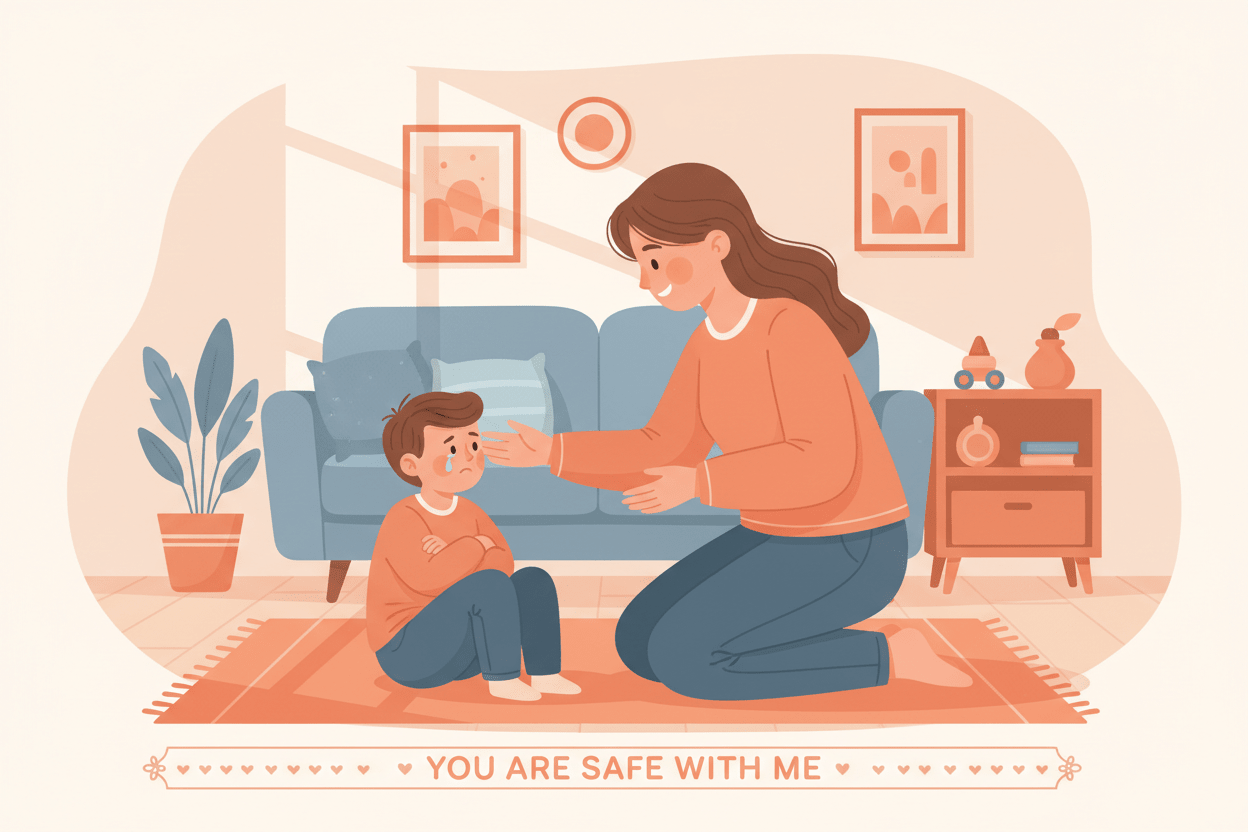
Why Your Kid Asks the Same Question 50 Times (and How to Break the Cycle)
"Are you sure we're safe?"
"Yes, we're safe."
"But what if something happens?"
"Nothing's going to happen."
"But how do you know?"
"I promise, everything's fine."
Five minutes later: "But are you sure we're safe?"
If this sounds familiar, you're not alone. And if you're wondering why your perfectly logical, reassuring answers don't seem to stick—welcome to the reassurance-seeking loop.
It's exhausting. It's maddening. And worst of all, it feels like it's getting worse instead of better.
Here's the hard truth: every time you answer that question, you're accidentally making the problem bigger.
What Reassurance-Seeking Actually Is
Reassurance-seeking is when your kid asks the same question over and over, even though you've already answered it. Multiple times. With facts. With promises. With every possible variation of "yes, everything's fine."
And still, they ask again.
It looks like: "Are we safe?" "Will you pick me up?" "What if I get sick?" "Are you going to die?" "Is this going to hurt?" "What if something bad happens?"
The question changes, but the pattern is the same: they need you to confirm that everything's okay. And when you do, the relief lasts approximately 30 seconds before the anxiety creeps back in and they need another hit of reassurance.
It's compulsive. It's driven by anxiety. And it's one of the clearest signs that your kid's nervous system is stuck in threat mode.
Why They Keep Asking (Even Though You Keep Answering)
Here's what's happening in your kid's brain:
Their anxiety is asking for certainty. "If I can just get Mom to promise nothing bad will happen, then I'll feel safe."
So they ask. You answer. They feel better—for a moment.
But anxiety doesn't actually want information. It wants a guarantee. And since guarantees don't exist in real life, the relief doesn't last. The "what if" creeps back in, and they need another dose of reassurance to feel okay again.
Every time you answer, you're training their brain that reassurance is the solution to anxiety. You're reinforcing the idea that the only way to feel safe is to get external validation that everything's fine.
And here's the kicker: it works. Temporarily. Which is exactly why they keep doing it.
This is called negative reinforcement. The behavior (asking for reassurance) successfully reduces the discomfort (anxiety), so the brain learns to repeat the behavior. Over and over and over.
You're not doing anything wrong by answering. You're being a good parent. But you're accidentally feeding the cycle.
Why Reassurance Feels Like the Right Move
Of course you answer the question. Your kid is scared. They're looking to you for comfort. What kind of parent would refuse to reassure their own child?
This is the trap.
Reassurance feels like helping. It looks like helping. In the short term, it is helping—your kid calms down, the moment passes, everyone moves on.
But in the long term, you're teaching them that they can't handle uncertainty without you. That anxiety is dangerous and needs to be eliminated immediately. That their own judgment isn't trustworthy, but your promises are.
And so their world gets smaller. They start avoiding anything that triggers the "what if" questions. They become more dependent on reassurance, not less. And the anxiety gets louder because it's learned that asking the question works.
The Reassurance Trap: It Gets Worse Before It Gets Better
Here's what most parents don't realize: the more reassurance you give, the more reassurance they need.
At first, one answer might be enough. But over time, the threshold goes up. Now they need you to answer twice. Then five times. Then they need you to pinky promise. Then they need you to swear on their life.
The anxiety is building a tolerance to reassurance, just like an addiction. And you're stuck in a cycle where nothing you say is ever enough.
This is why you feel like you're failing. You're giving them everything they're asking for, and it's still not working.
That's because reassurance isn't the solution. It's the problem.
What Breaking the Cycle Actually Looks Like
Okay, so if answering the question makes it worse, what are you supposed to do? Just ignore your kid when they're scared?
No. You're not abandoning them. You're teaching them a different skill.
Instead of giving them the answer, you're helping them learn to tolerate not having the answer.
Here's what that sounds like in practice:
Kid: "Are you sure we're safe?"
You: "I've already answered that question. What's your brain worried about right now?"
Or: "That sounds like an anxiety question. What do you think?"
Or: "I know you want me to promise everything will be okay. But I can't control the future, and neither can you. What we can do is handle whatever happens."
You're not dismissing their fear. You're redirecting them away from seeking external reassurance and toward building their own internal tolerance for uncertainty.
How to Respond Without Reinforcing the Loop
Here are the strategies that actually work:
1. Acknowledge the feeling, not the content
Don't engage with the "what if." Engage with the emotion underneath it.
"I can see you're really worried right now. That must feel hard."
You're validating their experience without feeding the anxiety.
2. Set a boundary around repetitive questions
"I'm going to answer this question one time, and then we're not going to talk about it anymore today."
Then stick to it. If they ask again, you calmly remind them: "I already answered that. We're done with that question for now."
This feels harsh. It's not. You're teaching them that anxiety doesn't get to run the show.
3. Turn the question back to them
"What do you think the answer is?"
Most of the time, they already know. They just want you to confirm it. By putting the question back on them, you're helping them trust their own judgment instead of outsourcing it to you.
4. Help them name what's happening
"It sounds like your anxiety is asking me to promise something I can't promise. That's what anxiety does—it wants guarantees. But we don't need guarantees to be okay."
You're externalizing the anxiety. It's not them. It's the anxiety talking. And they don't have to listen to it.
5. Use a script and stick to it
Pick one response and repeat it every time they ask the same question.
"I've already answered that."
"That's an anxiety question, and we're not feeding the anxiety today."
"I love you, and I'm not answering that again."
Consistency is key. If you cave and answer "just one more time," you're teaching them that persistence works. Don't do that.
The Extinction Burst: It Gets Worse Before It Gets Better
Here's the part no one tells you: when you stop giving reassurance, the behavior gets worse before it gets better.
This is called an extinction burst. Your kid's brain has learned that asking the question gets relief. When that suddenly stops working, the brain panics and ramps up the behavior to try to get the old result back.
So they'll ask louder. More urgently. With tears. With meltdowns. They'll escalate because the thing that used to work isn't working anymore, and they don't know what else to do.
This is the moment most parents break. It feels cruel. It feels like you're abandoning them in their moment of need.
But if you hold the boundary, the behavior will decrease. The brain will learn that reassurance-seeking doesn't work anymore, and it will stop trying.
If you cave during the extinction burst, you've just taught them that they need to escalate harder to get what they want. And now you're in an even worse cycle.
What to Do Instead of Reassuring
If you're not giving reassurance, what are you doing?
You're co-regulating. You're staying calm and present while they ride out the discomfort.
"I know this feels really hard. I'm right here with you. We're going to breathe through this together."
You're not giving them the answer. You're giving them you. Your calm nervous system helps regulate theirs.
You're teaching them that they can feel anxious and still be okay. That uncertainty isn't dangerous. That they're capable of tolerating discomfort without needing you to make it go away.
This is the skill that will serve them for the rest of their lives.
When Reassurance Is Actually Helpful
There's a difference between reasonable reassurance and compulsive reassurance-seeking.
If your kid asks a genuine question once, and they accept the answer and move on—that's normal. Answer it.
If they've never asked before, or it's tied to a new situation, or they genuinely don't know the answer—reassure them.
But if they're asking the same question for the fifth time today, or they've asked it every day this week, or they're clearly not satisfied no matter how you answer—that's the reassurance loop. And that's when you need to intervene.
The Long Game
Breaking the reassurance cycle doesn't happen overnight. It takes consistency, patience, and a lot of tolerating your own discomfort while your kid learns to tolerate theirs.
But here's what you're working toward: a kid who doesn't need constant external validation to feel safe. A kid who can handle uncertainty without falling apart. A kid who trusts their own ability to cope with hard things.
You're not being mean. You're not withholding love or support.
You're teaching them that they're stronger than they think. And that's the greatest gift you can give an anxious kid.
It's Okay to Mess Up
You're going to answer the question sometimes. You're going to cave during the extinction burst because you're tired and it's easier. You're going to forget your script and fall back into the old pattern.
That's okay. This isn't about perfection. It's about awareness and course-correction.
The goal isn't to never reassure your kid. The goal is to recognize when reassurance is helping and when it's hurting—and to respond accordingly.
Your kid doesn't need you to be perfect. They need you to be present, consistent, and willing to help them build the skills they need to manage their own anxiety.
And honestly? You're already doing better than you think.
What reassurance question does your kid ask on repeat? Reply and let me know—I read every message.