Why Your Child’s Anger Isn’t the Problem
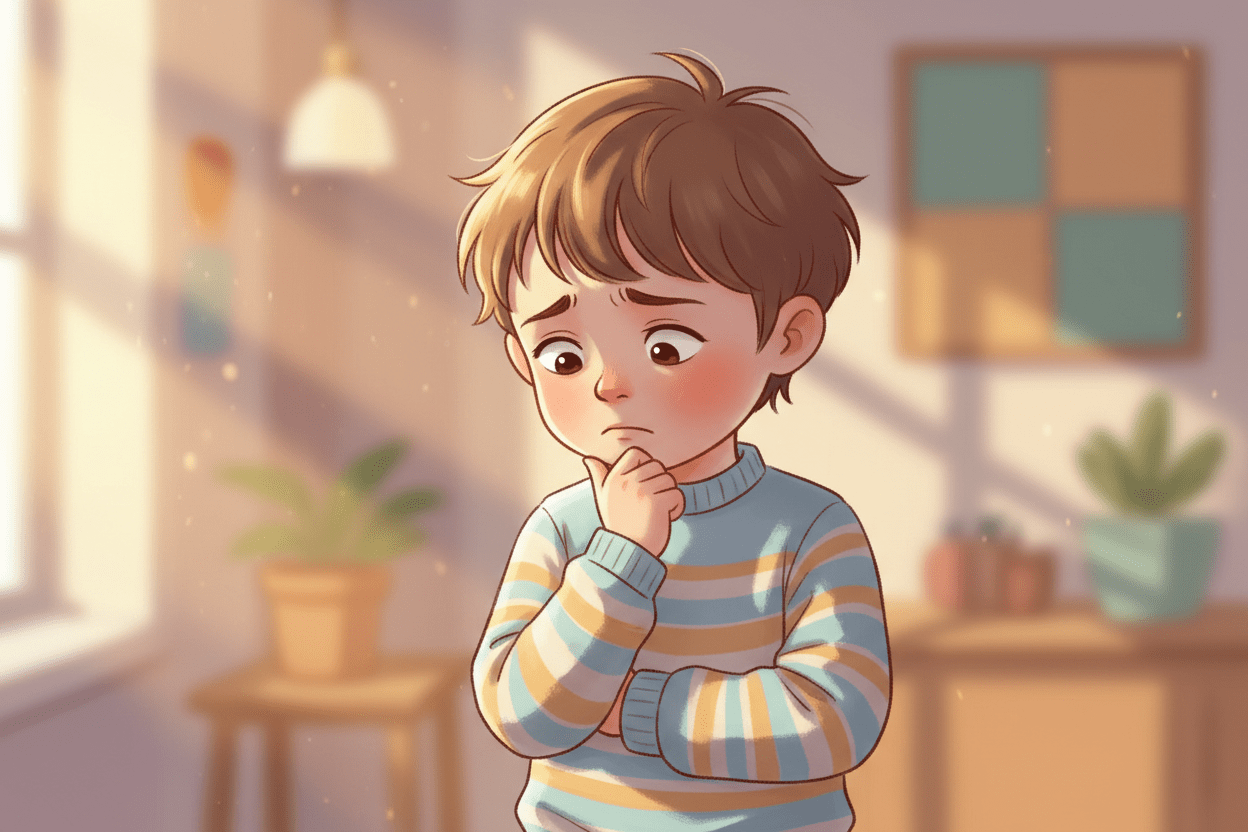
Your kid flips the board game. Throws the shoe. Screams something that makes your chest tighten.
And every instinct in your body says: Make it stop.
But here’s the thing nobody tells you about anger in kids — it’s not the real problem. It’s the alarm. And the fire is almost always something else entirely.
Anger is a bodyguard emotion
Anger is loud. It’s physical. It’s the feeling that gets kids sent to their room, put in time-out, and labeled “the difficult one.”
But underneath almost every angry outburst is a quieter feeling that didn’t get heard in time. Embarrassment. Rejection. Fear. Disappointment. Shame.
A child who flips the board game isn’t being dramatic. They’re a kid who doesn’t know how to say “I feel stupid when I lose.”
A child who screams “I hate you” isn’t cruel. They don’t have the words for “I’m scared you don’t love me right now.”
A child who hits their sibling isn’t mean. Their body moved faster than their brain.
What’s actually happening in their brain
When a child is overwhelmed by anger, their prefrontal cortex — the part of the brain responsible for reasoning, impulse control, and language — goes offline. The amygdala takes over. That’s the brain’s alarm system. It doesn’t think. It reacts.
This is why “use your words” doesn’t work mid-meltdown. They literally can’t. The part of the brain that makes words has temporarily shut down.
This isn’t a discipline failure. It’s biology.
What doesn’t work
“Stop crying.” This tells a child their feelings are wrong.
“You’re fine.” This tells a child not to trust what their body is telling them.
“Go to your room until you calm down.” This teaches a child they need to be alone with the biggest, scariest feelings they have.
These responses don’t stop anger. They teach kids to suppress it. And suppressed anger doesn’t disappear — it shows up later as anxiety, people-pleasing, perfectionism, or explosive episodes that seem to come out of nowhere.
What actually works
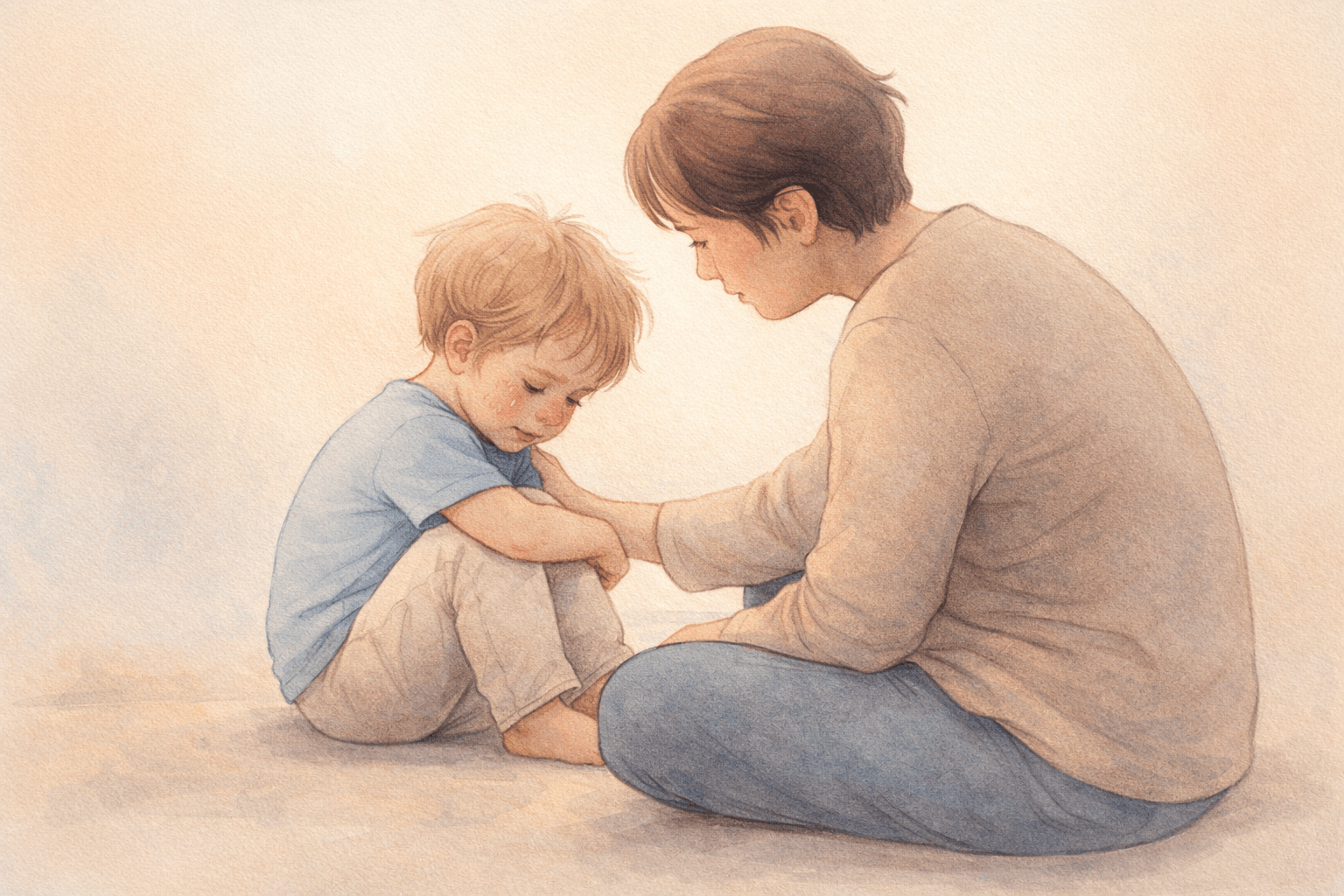
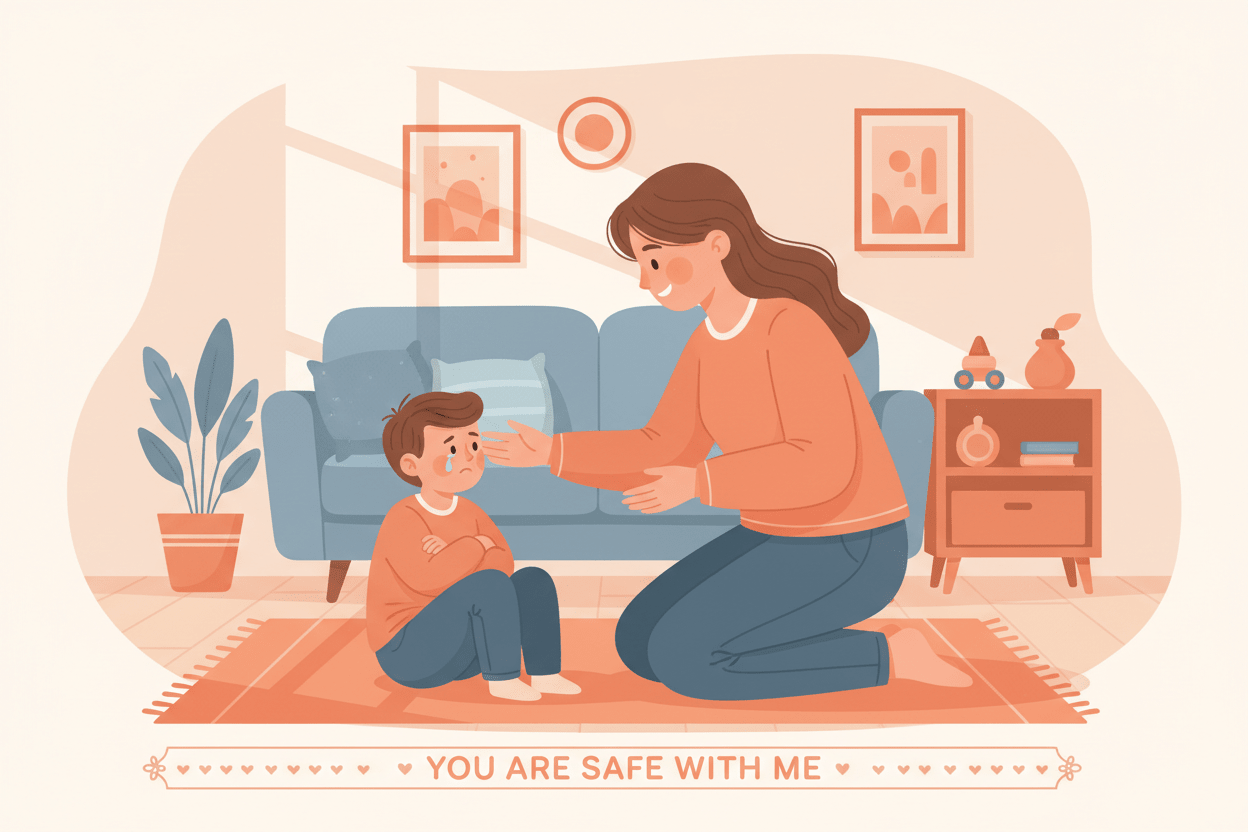
Get low. Physically get on their level. Crouch down, sit on the floor. This signals safety.
Stay calm. Not because you’re unbothered — but because your regulated nervous system is the thing that helps regulate theirs. This is called co-regulation, and it’s the foundation of how kids learn to manage emotions.
Name the feeling. “You look really angry right now.” That’s it. You’re not fixing it. You’re letting them know you see it. For a child whose brain has gone offline, being seen is the first step back to safety.
Validate before you correct. “It’s okay to feel angry. It’s not okay to throw things.” Both things are true. Both things can exist at the same time. This is how kids learn that feelings are allowed and actions have boundaries.
The long game
Here’s what I want every parent reading this to understand:
The child who learns to feel anger safely becomes the adult who doesn’t explode at their partner, shut down at work, or numb out with a bottle of wine every night.
You’re not just managing a meltdown. You’re building the emotional architecture your child will live inside for the rest of their life.
That’s not soft parenting. That’s the hardest, most important work there is.
And the fact that you’re reading this at all means you’re already doing it.
———