Why Affirmations Help Children with Build Emotional Strength
Children develop their inner voice long before they understand what it is.
That voice becomes the way they talk to themselves when something is hard, when they make a mistake, or when emotions feel big.
The question isn’t whether children will develop an inner voice.
The question is what that voice will say.
Affirmations help shape that voice into something supportive instead of critical.
Over time, the phrases children hear from trusted adults become the words they repeat to themselves. When those words are encouraging and compassionate, children learn to face challenges with confidence instead of shame.
What Are Affirmations for Kids?
Affirmations are simple, positive statements that help children build confidence, resilience, and emotional awareness.
For children, affirmations are not about pretending everything is perfect. They are about helping kids understand that they can handle challenges and keep learning.
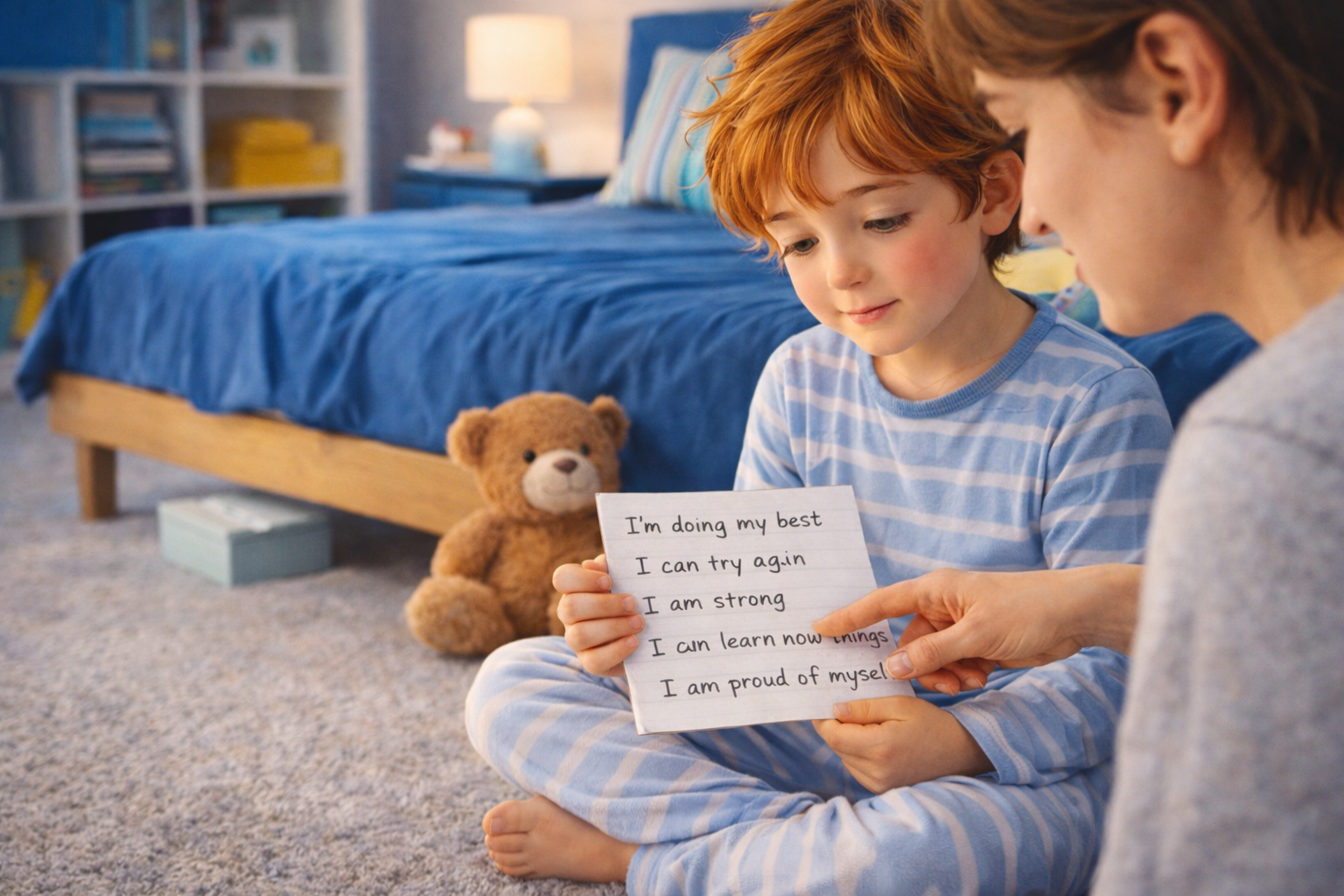
Examples include:
“I am doing my best.”
“I can learn new things.”
“I am stronger than I think.”
“I can try again.”
“I am proud of myself.”
These phrases may sound simple, but they help children build a healthier relationship with effort and mistakes.
Why Affirmations Matter for Emotional Development
Children often interpret mistakes in very personal ways.
Instead of thinking:
“That didn’t work.”
They often think:
“I’m bad.”
“I always mess up.”
“I can’t do anything right.”
Affirmations interrupt this pattern.
They help children shift from self-criticism to self-compassion.
Over time, these small phrases become the internal voice children use when they face challenges.
And that voice becomes resilience.
How to Practice Affirmations With Your Child
The most effective affirmations happen during everyday moments.
Here are a few simple ways parents can introduce them:
-
Model the language yourself
Children learn emotional language by hearing it from adults.
For example:
“That was hard, but I kept trying.”
“I’m proud of how patient I was.”
-
Use affirmations during hard moments
When a child feels frustrated or overwhelmed, repeat a simple phrase together:
“We can try again.”
“I am doing my best.”
This helps regulate emotions and shifts the focus toward effort.
-
Practice before bedtime
Bedtime is a powerful time to reinforce positive messages.
Ask your child:
“What is something you’re proud of yourself for today?”
Even small answers help build confidence.
The Goal Isn’t Perfect Kids
Affirmations are not about raising children who believe they are perfect.
They are about raising children who believe they are capable.
Kids who understand:
Mistakes are part of learning.
Hard things can be handled.
Their effort matters.
When children learn to speak to themselves with encouragement instead of criticism, they develop the emotional strength to navigate challenges.
And that strength lasts long after childhood.