Physical Signs Your Child Is Anxious at Bedtime (That Look Like Something Else)

You know the drill. Teeth are brushed. Book is read. Lights are off. And then it starts.
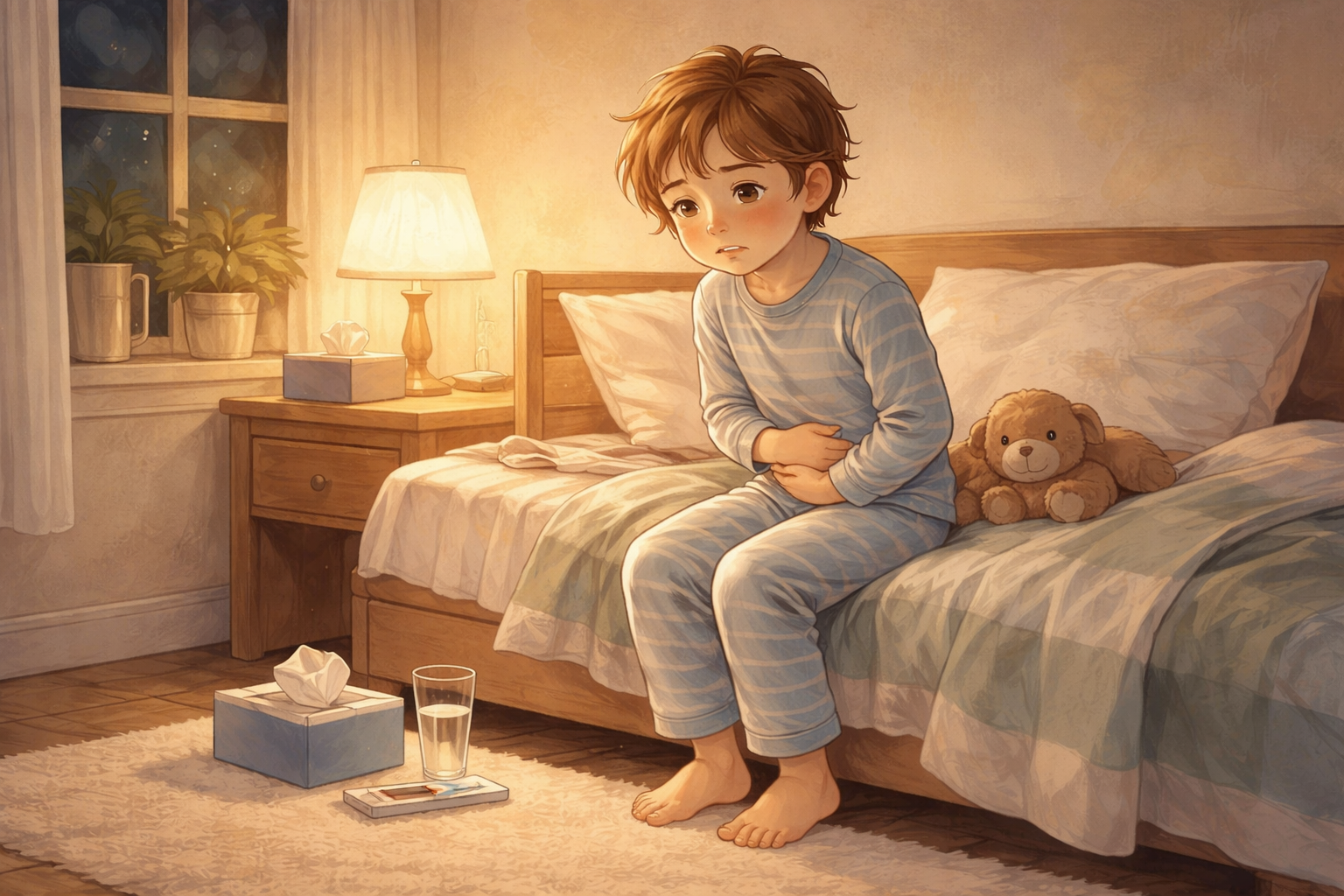
"My tummy hurts."
"My legs feel weird."
"I can't get comfortable."
You've checked for fevers. You've adjusted the blankets six times. You've Googled "child stomach ache every night" at 10 PM more times than you'd like to admit. And everything comes back normal.
Here's what nobody told me for the longest time: anxiety doesn't always start in the brain. For young kids, it almost always starts in the body.
Children ages 3–7 don't have the vocabulary to say "I'm experiencing a wave of dread about being separated from you in a dark room." So their body says it for them. And as parents, we often miss it — because it looks like a stomachache, or pickiness, or just being difficult.
These are the five physical signs that your child's bedtime behavior might actually be anxiety.
1. The Bedtime Tummy Ache
This is the big one. Your child complains of stomach pain almost every night at bedtime — but by morning, they're completely fine. No fever. No changes in appetite during the day. No other symptoms.
What's happening: The gut is loaded with nerve endings and is deeply connected to the brain's stress response. When anxiety spikes, the gut responds — cramping, nausea, that "butterflies" feeling adults recognize but kids can't name. For a 4-year-old, it just feels like their tummy hurts. And it does. This isn't faking. Their stomach is genuinely reacting to the anxiety their brain is producing.
What to try: Instead of "your tummy is fine," try "sometimes our tummy gets tight when our brain is feeling worried. Let's take three slow breaths and see if your tummy relaxes a little." You're connecting the dots for them between body and brain — which is a skill they'll use for the rest of their life.
2. The Wiggle Worm
They can't stop moving. Kicking the covers, rolling from side to side, flopping around like a fish. You've tried weighted blankets. You've tried exhausting them at the playground. Nothing works.
What's happening: Anxiety is energy. When a child's nervous system is activated, their body is flooded with stress hormones that are literally preparing them to fight or run. That energy has to go somewhere. At bedtime, when they're supposed to be still, it shows up as restlessness. "My legs feel wiggly" is one of the most common descriptions anxious kids give — and most parents chalk it up to being overtired or having too much sugar.
What to try: Before bed, do 2-3 minutes of intentional physical release. Wall push-ups, squeezing a pillow as hard as they can, or "shaking out the wiggles" — literally shaking their arms and legs for 30 seconds. Give the energy an exit before you ask their body to be still.
3. Clenched Fists, Tight Jaw, Curled Toes
This one is subtle. You might notice it when you're lying next to them or holding their hand at bedtime. Their fists are balled up. Their jaw is tight. Their toes are curled under the blanket. They might not even realize they're doing it.
What's happening: Muscle tension is one of the earliest physical responses to anxiety — it happens before conscious thought kicks in. For young kids, this is often the very first signal that their body is in stress mode. It's also the signal most parents miss because the child isn't complaining. They're just... tense.
What to try: Make it a game. "Let's do squeeze and melt — squeeze your fists as TIGHT as you can for 5 seconds... and now melt them like butter." Work through the body — fists, shoulders, toes, face. This progressive muscle relaxation technique is used in therapy for anxious adults, and it works beautifully for kids when you make it playful.
4. Can't Get Comfortable
The pillow is wrong. The blanket is too heavy. Now it's too light. The tag on their pajamas is scratchy. The sheet feels weird. They need to change positions seventeen times.
What's happening: When the nervous system is on high alert, sensory input gets amplified. Things that don't bother them during the day suddenly become unbearable at night. It's not that the tag on their shirt got scratchier — it's that their brain's threat detection system is turned up to max, and everything feels like too much. This often gets misread as pickiness or stalling.
What to try: Don't fight it. If they need the tag cut out, cut it out. If they need a different blanket, swap it. But also name what's happening: "Your body is feeling extra sensitive tonight. That usually means your brain is doing some worrying. Want to tell me about it?" Sometimes the physical complaints are the only door they know how to open.
5. Complaints That Move Around
Monday it's a headache. Tuesday their knee hurts. Wednesday their ear feels funny. Thursday it's the tummy again. Nothing is consistent, nothing is diagnosable, and nothing shows up at the pediatrician's office.
What's happening: Young kids are still learning to map their internal experience to language. When anxiety creates a vague, uncomfortable physical sensation, they grab the closest word they have — which changes depending on where they feel it most that night. This is especially common in kids ages 3–5 who don't yet have a concept of "anxiety" as a feeling. They just know something feels wrong in their body, and they describe it as best they can.
What to try: Keep a simple log for a week. Note what they complain about, when, and what happened that day. You'll almost always see a pattern — the complaints cluster around bedtime and around days with more stress (new situations, changes in routine, conflict with friends). That pattern is your answer.
The Bigger Picture
Here's what all five of these signs have in common: the child is telling you something is wrong, but they're using their body instead of their words. Not because they're manipulating you — because they literally don't have the language yet.
Your job isn't to fix the stomachache or stop the fidgeting. Your job is to hear the message underneath it: I'm anxious, and I need help.
If this sounds like your kid, I wrote a full guide on bedtime anxiety — what's actually happening in their brain, a step-by-step routine that works, and exactly what to say (and stop saying) when anxiety takes over at night.
→ Read the complete guide: [Bedtime Anxiety in Kids: A Parent's Complete Guide](link to /pages/bedtime-anxiety-guide)
And if your child is between 3 and 7, Chase and the Worry Cloud helps them see their anxiety as something they can name, talk to, and talk back to. It's the bedtime read I wish existed when I was figuring all of this out on my own.
→ Get the book: https://www.chasesbigfeelings.com/products/chase-and-the-worry-cloud