Why Your Kid Suddenly Won't Sleep Alone | Chase's Big Feelings
 Your kid used to sleep fine. Maybe not perfectly — but they'd go to bed, stay in bed, and wake up in the morning. Done.
And then something shifted.
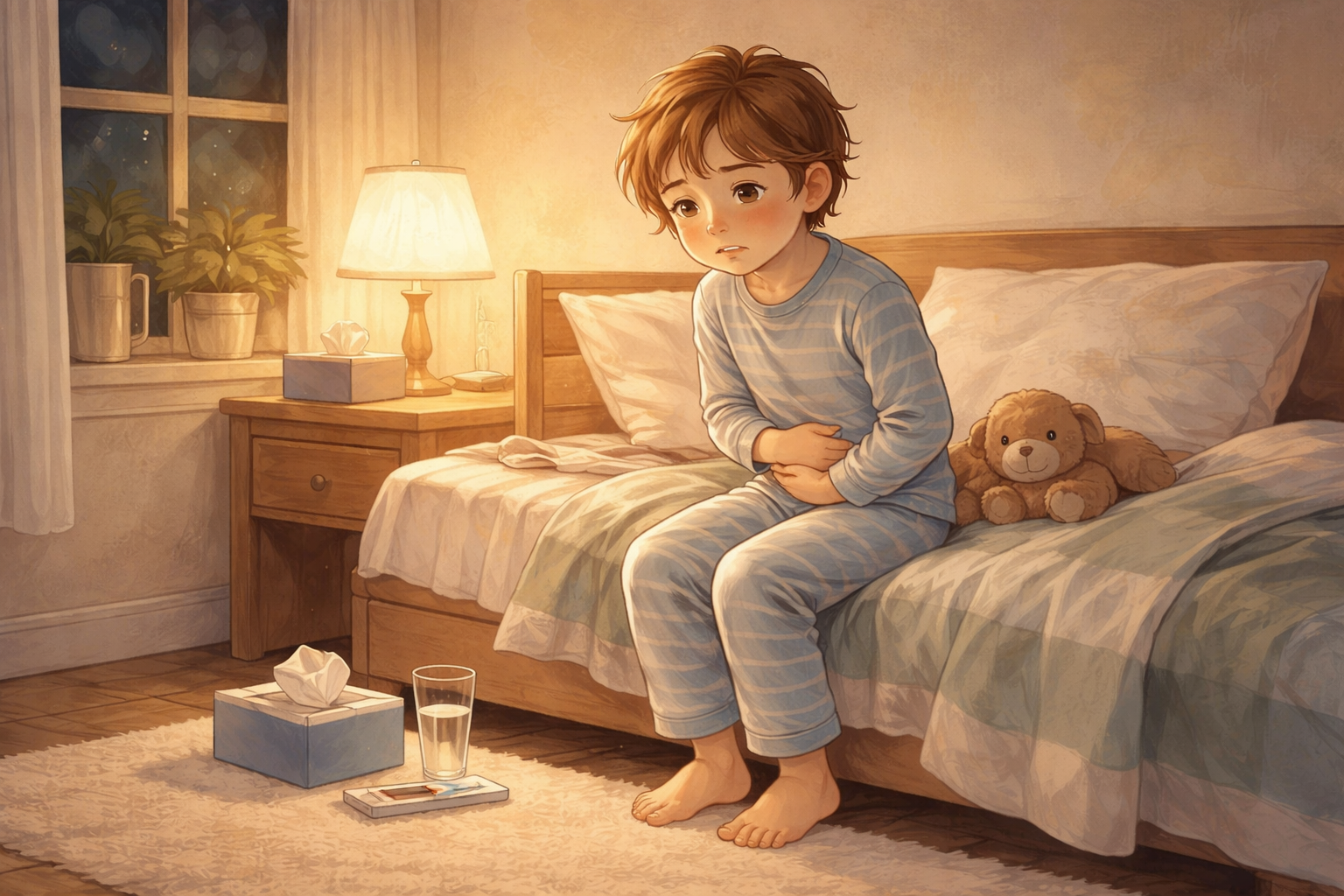
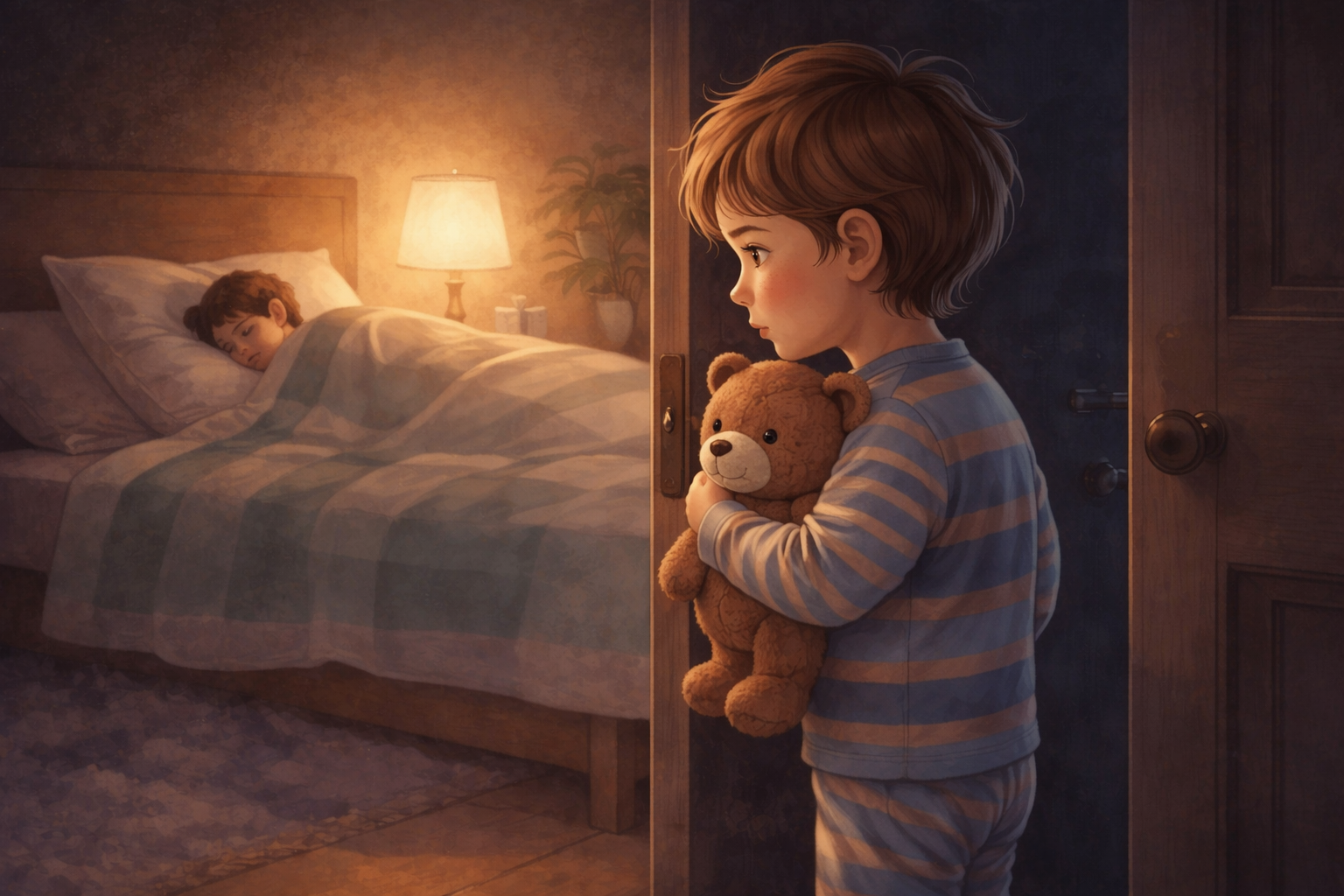
Now they won't let you leave the room. They're in your bed at midnight. They're crying when you walk toward the door. They need you there, next to them, until they fall asleep — and sometimes even that isn't enough.
If you're reading this wondering what you did wrong, the answer is probably nothing. This is one of the most common things parents of kids ages 3–7 deal with, and it almost never means something is broken. It means something is developing.
Why This Happens (Even in Kids Who Used to Be Fine)
There are a few reasons a child who previously slept independently suddenly can't.
Their brain got smarter. This sounds counterintuitive, but cognitive development is often the trigger. Around ages 3–5, kids develop a much more sophisticated ability to imagine. They can picture things that aren't there — monsters, burglars, something happening to you while they sleep. This is actually a sign of healthy brain development, but it makes bedtime terrifying because their imagination has outpaced their ability to reason through it.
Something changed. A new school. A move. A new sibling. A parent traveling for work. Overhearing an argument. A scary scene in a movie they weren't supposed to see. Kids don't always connect the dots between a daytime event and a nighttime fear — but their nervous system does. If the onset was sudden, think about what changed in the two weeks before it started.
They experienced a scare. A nightmare that felt real. A loud noise at night. Waking up and not knowing where you were. Sometimes a single frightening nighttime experience is enough to create a pattern of anxiety that sticks for weeks or months.
They're going through a developmental leap. Growth spurts, big cognitive leaps, starting school, learning to read — these are all periods where kids temporarily regress in other areas. Sleep is usually the first thing to go. It doesn't mean the progress they made is lost. It means their brain is busy building something new and doesn't have the bandwidth to also be brave at night.
What NOT to Do
Before I get into what works, let me save you from a few things I tried that made it worse.
Don't shame them. "You're too old for this" or "your little brother sleeps fine by himself" adds humiliation to an already overwhelming feeling. They're not choosing this. Their nervous system is running the show.
Don't go cold turkey. "Tonight you're sleeping alone, end of discussion" might work for a kid who's testing boundaries. For an anxious kid, it confirms their worst fear: that their feelings don't matter and they're truly on their own. This usually escalates the problem dramatically.
Don't make it a reward/punishment situation. Sticker charts for staying in bed, losing privileges for coming out — these frame sleep as a performance. Your kid isn't failing a test. They're scared.
Don't panic. This feels permanent when you're in it. It's not. With the right approach, most kids work through this in 2–6 weeks.
What to Do Instead
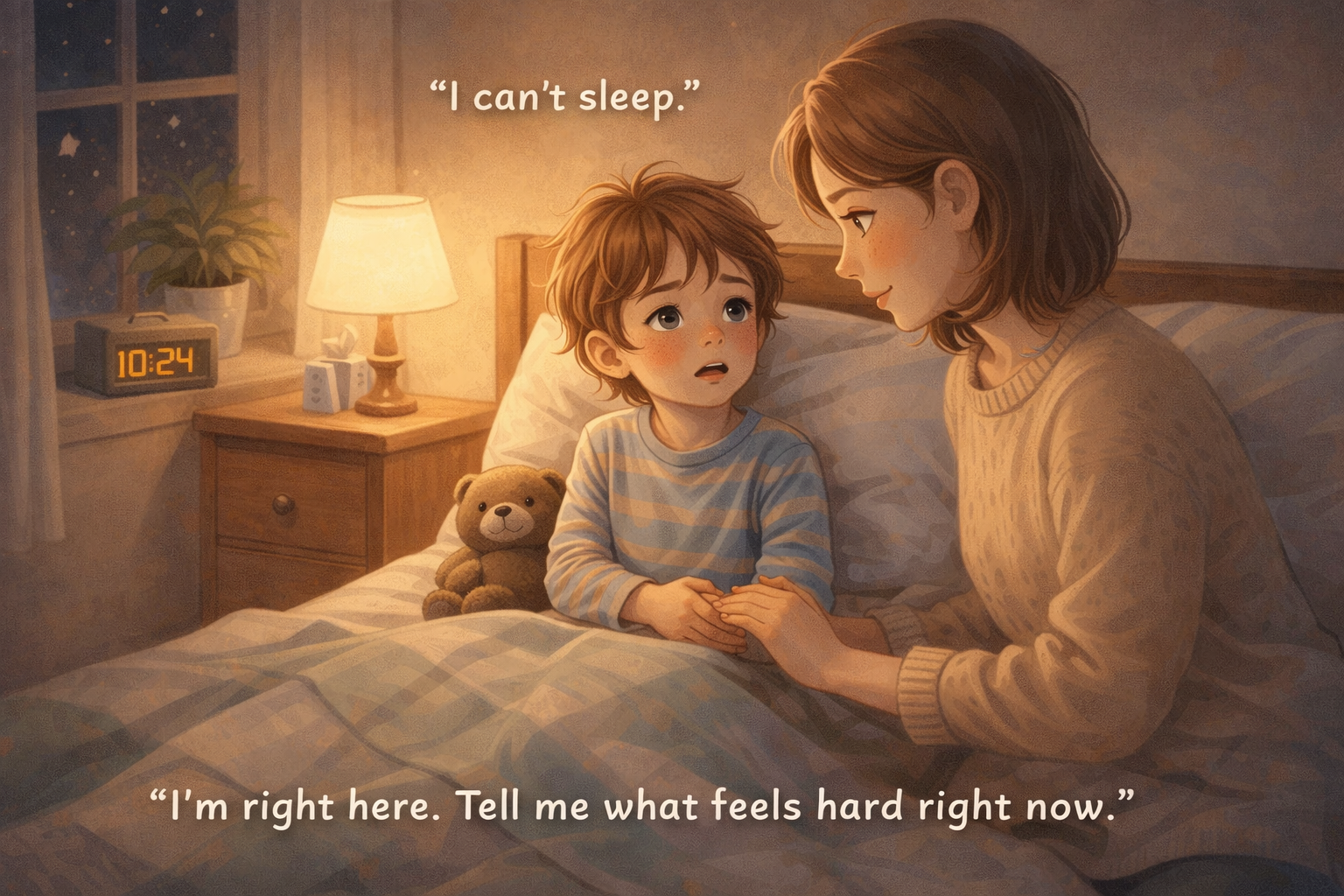
Name it without judging it. "It seems like sleeping alone has been feeling really hard lately. That's okay. We're going to figure this out together." Just hearing you say it's okay to struggle — without trying to fix it immediately — can bring their anxiety down a notch.
Find out what specifically scares them. "What's the hardest part about being in your room alone?" You might be surprised by the answer. It might not be monsters or the dark. It might be "I'm scared you won't be there in the morning" or "I don't like the sound the house makes." You can't solve a problem you don't understand.
Use a gradual approach. This is the most effective method for anxious kids, and I lay out the full week-by-week plan in the bedtime anxiety guide. But the short version is:
- Week 1: Stay in the room, not in the bed (sit in a chair)
- Week 2: Move the chair toward the door
- Week 3: Sit just outside the door where they can see you
- Week 4: Check-ins at intervals — "I'll be back in 5 minutes"
Each step gives them slightly more independence while maintaining the safety net of your presence. The key is not rushing it. They set the pace.
Give them something concrete to hold onto. "I'll check on you in 5 minutes" only works if you actually check. Follow through every single time until they trust the system. Then gradually lengthen the intervals. A stuffed animal with a specific job ("Brave Bear watches over you while I'm in the other room") can also bridge the gap.
Separate "going to bed" from "falling asleep." Anxious kids often panic because they associate bedtime with the pressure of falling asleep — which they can't control. Remove the pressure: "You don't have to fall asleep. Just rest your body. Listen to your audiobook. Sleep will come when it comes." This tiny reframe takes the performance anxiety out of the equation.
When to Get Help
If the won't-sleep-alone situation has persisted for more than 2–3 months with no improvement despite consistent effort, or if the anxiety is bleeding into daytime (school avoidance, separation anxiety in other settings, frequent physical complaints), it's worth talking to your pediatrician or a child therapist. Childhood anxiety responds really well to early support — and getting help isn't a sign of failure. It's a sign you're paying attention.
The Full Picture
This post covers the "why" and the "what to do right now." But if you want the full framework — the bedtime routine that works for anxious kids, the exact scripts for what to say when they're melting down, and which bedtime tools actually help versus which ones to skip — I put it all in one place.
→ Read the complete guide: [Bedtime Anxiety in Kids: A Parent's Complete Guide](link to /pages/bedtime-anxiety-guide)
And if your child is in the 3–7 range, Chase and the Worry Cloud was written for exactly this moment. It gives kids a way to see their worry as something outside of themselves — something they can talk to and talk back to. It's become a lot of families' go-to bedtime read for the hard nights.